
A mirror? What does a mirror have to do with communication? The more important questions are these. Is it a reflection or reality?
After a trying relationship experience with Carol, I glanced at a mirror on the wall. The mirror itself is just a pane of glass with a reflective coating. I really wasn’t noticing the mirror. The picture I saw in the mirror was a reflection of Carol’s cluttered desk – not the desk itself. I could get pissed off about the cluttered desk, just as I had done in the relationship experience. Yet are my emotions about what I’m really seeing? Or are they attributed to a reflection of what I think I see?
Dang, I dislike when these profound thoughts interrupt my “need and want” to be pissed off for a bit longer. I wasn’t quite ready to let that attack go.
You might be thinking, “Dan, what the heck are you talking about?”
I invite you to stick with me as we explore this together, because I know there is a lesson here somewhere. I’d love to know your thoughts about this.
Is it a reflection or reality?
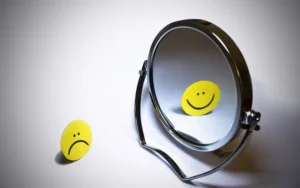
First the mirror deal
When I look into a mirror, what I see is not the actual thing, it is only a reflection. As I change my position in the room, the reflection changes as well.
By looking at that reflection, I can’t totally understand what I think I see because it is not the real thing, and I’m only seeing it from one perspective, which changes as I move.
To complicate this, imagine what might happen if there is a crack in the mirror. Or it could be a slight wobble in the glass, like you experience in a “house of mirrors.” Or there could be a gob of dust, or fingerprints, or splatter from a dental floss experience. Any of these things affect or distort the reflection of what I think I see.
The point is: what I think I see (the relationship experience or the image in the mirror) is not the real thing. My understanding of it could be (and likely is) distorted, warped, and totally out of whack. But in my mind, I’m “right.”
To complicate this further, because of the time lapse, the image or experience is in the past – it’s done and can’t be changed.
Is it a reflection or reality?
Second is the emotional deal
The image I think I see, or the relational situation I was in, are neutral – not right or wrong. It was my attachment (or investment) to “the way they were supposed to be” that allowed me to judge them as wrong. Therefore, in my victimized state of mind, I had the right, and the justification, to be pissed off.
Is it a reflection or reality?
My big problem and error
If you can follow my twists and turns, you might see a pattern that I have identified in myself, and it also happens with others.
Was I pissed off at Carol’s opinion (in the relationship experience) or her behaviour (of having a cluttered desk)?
No, I allowed myself to be pissed off at her.
Ouch!! Where else in life do I do this, whereby I make a harsh judgement of a person because of their opinions or behaviour? I’m getting better, but I still do this at times.
A societal problem and error
Recently, I’ve been involved in multiple conversations in which Trump, Carney, Smith, other politicians, doctors, school teachers, and even some youth are labelled as “bad” people. In these situations, “bad” would be a very polite reframe of the words that were used.
The big error is that if you and I have the courage and desire to look beyond the reflection, these people are all amazing human beings, just like you and me. They are born innocent. They are perfect, passionate, visionary, resourceful, and capable. In their specific positions or situations, they were making the best decisions they could with what they knew at the time.
Do those people make errors? Absolutely. Do I make errors? Yes, lots of them.
What about you? Have you ever made a decision that you later discovered was not the best decision?
The cool thing I’m realizing is that errors can be corrected. Inappropriate behaviour can happen differently next time. Differences of opinions are excellent opportunities for people to engage in constructive dialogue, collaboration, creativity, and exponential solution-creation.
The solution for me
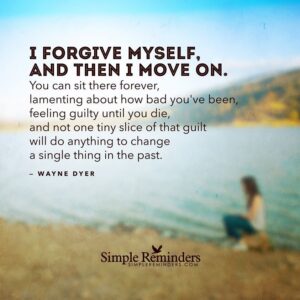
Here is the hard, yet simple stuff. I will forgive myself.
In point form, I will (that’s a commitment):
- “rise above the battleground,” “step away from the drama,” and look at the situations for what they really are.
- forgive myself for the stories I’ve made about others and the specific situations. They were reflections or neutral events.
- forgive myself for my judgements, harsh words, and less-than-kind behaviour.
- forgive others for their errors and see them as the amazing humans they are (this is all done in my mind, not to them verbally).
- inject love, knowing this is all that is needed – love of myself and others.
Is it a reflection or reality?
Here’s my lesson
I always have choice about what I think, see, and feel in every situation. These determine my choice of behaviour.
From now on, I’m going to be:
- curious, to ensure I understand the various perspectives (or reflections) of what I think I see.
- attentive to the fact that the behaviour is not the person.
- kind and compassionate to myself and the other person.
- honest with myself and others to question assumptions and judgements.
- collaborative to explore the situation and to strive to create the best solution for all involved.
The expected results will be greater trust, joy, happiness, and peace of mind. I think it’s worth it.
What about you? In your relationship situations, are they reflections? Or reality?